
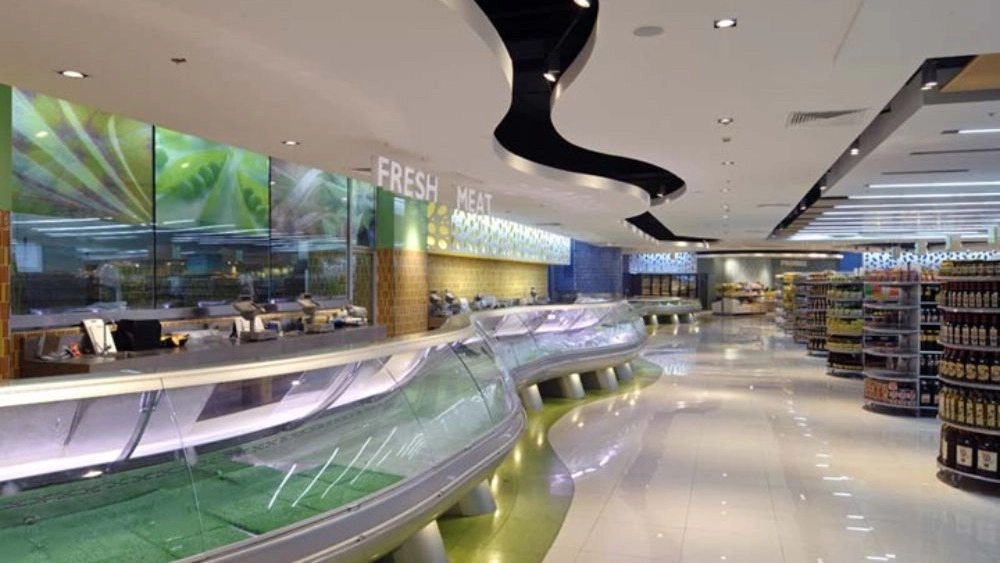
The role and impact of store design on more sales
In previous articles we talked about smart retail or using new technology to optimize the customer experience in the store. In this article, we discuss another very important element: store design and its effect on sales. Sight is the most developed human sense, and one of the first things we notice when entering a store is its appearance.
The architecture of a store
The design of the store must be considered so that the shopping experience of the consumer is as unique and unforgettable as possible. Research from the University of Sussex shows that when evaluating brands, consumers rely primarily on the emotions the brand evokes and on previous purchase experiences. It is only in the later stages that the quality and brand features come into play. As you might guess, retail design isn't just about physical spaces, it's also about telling stories and evoking emotions in customers.
In this article, we discuss current trends as well as the most important things to remember when implementing an in-store retail design strategy.
What are the most important aspects of an effective retail design strategy?
When talking about store design strategies, it is important to touch upon the concept of store layout, or better yet, the strategic use of a physical or digital space to positively impact the customer experience. The layout of a physical store includes both indoor and outdoor spaces.
When it comes to interior spaces, two elements must be considered:
• Store design. This includes using appropriate floor plans and techniques to effectively manage the store area, which includes furniture, windows and lighting. Some commands can also be used to direct customers.
It's all about identifying customer preferences in terms of displayed products and their usual route around the store. Basically, this particular aspect focuses on the most visited areas of the store and those that receive the most attention.
In the case of outdoor spaces, the following factors are very important when building an effective strategy:
• The location or city area where the store is located.
• Store size.
• If there is a space between the street and the store, it can be used to create a primary reception area for interaction with customers.
• The architectural style of the building where the store is located, including windows and entrance space.
In the next few paragraphs, we'll analyze how to optimize your retail space by providing some examples of the most commonly used floor plans.
Should your store have one or more floors?
The starting point for profit maximization, retail design strategy is deciding whether to open a store with one or more floors.
In the book Store Design and Visual Merchandising, authors Klaus Abster and Marion Garraus analyze consumer behavior in a store and how retail design can help them find their way around a store.
One of the most important things they highlight is the user's preference for the first floor of a store. Stairs and elevators often disrupt customer flow, showing that single-story stores can actually be much more efficient.
It is a completely different story for department stores that sell a wide range of products or luxury goods.
Level stores are often associated with elite department style concepts.
How can you identify customer flow?
Cameras and sensors connected to data analysis systems are the best solution for understanding how people move through your shop, what they do and where they linger. However, if you do not have this type of technology, we recommend using Calus Follow Ebster.
Most people turn right when entering the store and move counter-clockwise. According to many store designers, a way to optimize retail design is to place leading products and the most important information (e.g. promotional campaigns) to the right of the entrance and just outside the transition area. The transition area is the area adjacent to the entrance and represents the space that customers need to understand the structure of the store and their orientation in it.
This is why placing information and products in this space is often not recommended.
Get rid of any cramped space as it has a negative effect on the design of the store
When developing a retail design strategy, consider narrow spaces that impede movement. A number of studies show that consumers, especially women, value having enough space to move around while shopping. For example, if a customer has to maneuver over piles of clothes to get to the fitting rooms, they will likely decide not to return.
Layout examples: advantages and disadvantages
Once you understand how customers explore your store, you can improve how they interact with your products. In order to create an environment that promotes the right buying behavior, you need to start by focusing on design.
Your layout should:
• Maximize the spaces allocated to products.
• Based on the principles of customer behavior.
• Ensure that the customer flow is as smooth as possible without sacrificing artistic decoration.
Forced route layouts
As you may have guessed, this type of retail store layout forces customers to follow a certain path. A typical example of this design is IKEA. Forced aisles require customers to look at all product categories sold by the store and can encourage impulse purchases.
However, this type of plan can be annoying for people who have a specific purchase goal. who simply want to find the product they want without having to wander through all the different sections. Another downside is creating a customer experience that is too fast because customers see others rushing from one area to another in the store.
Geometric arrangements
Geometric layouts are often used by retailers to sell products to the new generation of Millenials and Generation Z. This is because when combined with the right display and appliances, they match artistic taste with function. Geometric layouts also make use of different display shapes and sizes.
This type of layout allows you to create unique and original furniture combinations that embody your brand and how you sell. These are known as "conversational" retail design experiences, where the story you want to tell is clearly communicated to your customers.
The downside of this layout is the high degree of customization.
To implement it effectively, you need to make sure you fully understand your customer type/goal.
Free flow layouts
This particular design follows a logic that is the exact opposite of the forced path. The space is not laid out according to defined design paths and the clients have complete decision. Creating independence in how to move in space. Unlike forced paths, this layout doesn't risk creating a rushed or careless customer experience. On the other hand, achieving efficient space management can be difficult.
Pucka Shelf Consolidation Company provides you with everything you need about the store.